

Business transitions are a natural part of a company's life cycle. As companies grow, change ownership, pursue acquisitions, or work through temporary setbacks, the financing structure that once fit the business may no longer support what's next.
Business transition financing helps companies move through these periods by supporting financing needs that evolve alongside the business. Asset-based lending supports that process by looking beyond recent financial performance and focusing on the strength of the company's underlying assets.
This article explores when business transition financing makes sense, how asset-based lending works, what businesses can expect throughout the financing process, and why many companies continue using asset-based lending long after the transition has passed.
When Is Business Transition Financing The Right Fit?
Strong companies outgrow financing structures all the time, especially during business transitions, when they reach a point where their financing no longer reflects the realities of the business. A planned acquisition, an ownership transition, rapid growth, or a temporary downturn can all change a company's financial profile, even while the business remains fundamentally sound.
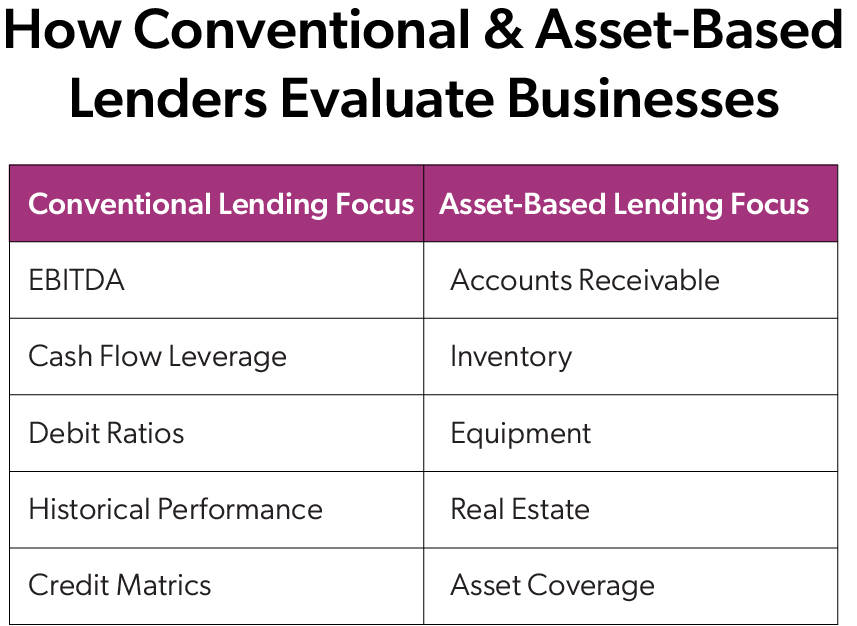 Those changes often influence how lenders evaluate businesses. Conventional lenders operate within defined credit parameters. Two or three consecutive years of losses, cash flow leverage climbing above roughly 2.5 to 3 times on a senior basis or 4 times all-in, or a debt-to-equity ratio above 4 times often prompt a lender to reevaluate the relationship. These benchmarks exist for a reason, but they don't always capture the full picture of a business in transition.
Asset-based lending approaches that picture differently. Rather than relying primarily on cash flow multiples, it evaluates the value of the company's underlying assets, including accounts receivable, inventory, equipment, and real estate. A business that generated $5 million in EBITDA before a temporary decline to $2 million may exceed a conventional lender's leverage limits, yet still have sufficient asset coverage to support a $15 million to $20 million lending facility.
That distinction matters because business transition financing extends well beyond turnaround situations. Acquisitions and ownership changes often involve healthy, well-managed companies. The temporary variable is the capital structure, not the quality of the business.
Asset-Based Lending For Acquisition Financing, Growth, And Restructuring
Each type of business transition creates different financing challenges. Some involve planned growth, while others result from changing market conditions or shifts in ownership. Asset-based lending structures financing around the company's available collateral, giving businesses access to capital when conventional lending may no longer align with their needs.
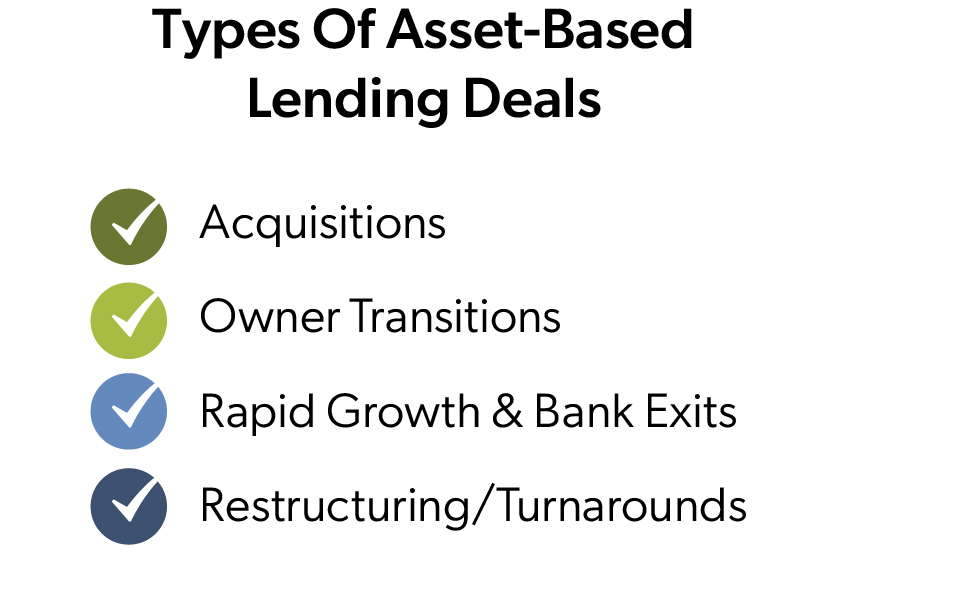 Acquisitions and add-on acquisitions. Asset-based lending can structure financing around the assets of the acquiring company, the business being acquired, or a combination of both. The amount available depends on the value of those assets, creating additional borrowing capacity beyond what cash flow alone may support. Any remaining gap is typically funded with equity, mezzanine, seller debt, or some other type of capital. In some cases, if the assets support it, it’s possible that no other form of capital would be required to complete the acquisition.
Ownership transitions and management buyouts. When one owner buys out another, the business can often be leveraged to fund the transaction without requiring the remaining owner to contribute significant additional capital. The new debt pays out the departing owner or owners, while the remaining owner takes over a business with a new capital structure. The dynamic resembles refinancing a home to buy out other owners, such as siblings who inherit a house together when only one wants to keep it. The financing stays with the asset rather than requiring the buyer to pay the full purchase price in cash.
Rapid growth and bank exits. Strong growth can push a business beyond a lender's credit appetite, even when performance remains healthy. In other situations, banks reduce exposure to certain industries or reevaluate relationships based on leverage or recent financial results. Asset-based lending provides a financing structure that reflects the company's assets and current needs, often allowing the business to continue executing its growth strategy without interruption.
Restructuring and turnarounds. Businesses working through a restructuring often need a financing partner that recognizes where the company is headed rather than focusing exclusively on where it has been. Companies with experienced leadership, credible financial projections, and sufficient asset coverage can use asset-based lending as a bridge while returning to stronger financial performance. Many ultimately become eligible for conventional financing again, yet choose to remain with an asset-based lender because the structure continues to support the business as it evolves.
How Is an Asset-Based Lending Facility Structured?
Asset-based lending facilities are typically structured by working down a company's balance sheet. They begin with working capital and may incorporate additional assets to create a financing solution that reflects the needs of the business. Depending on the situation, a facility may include:
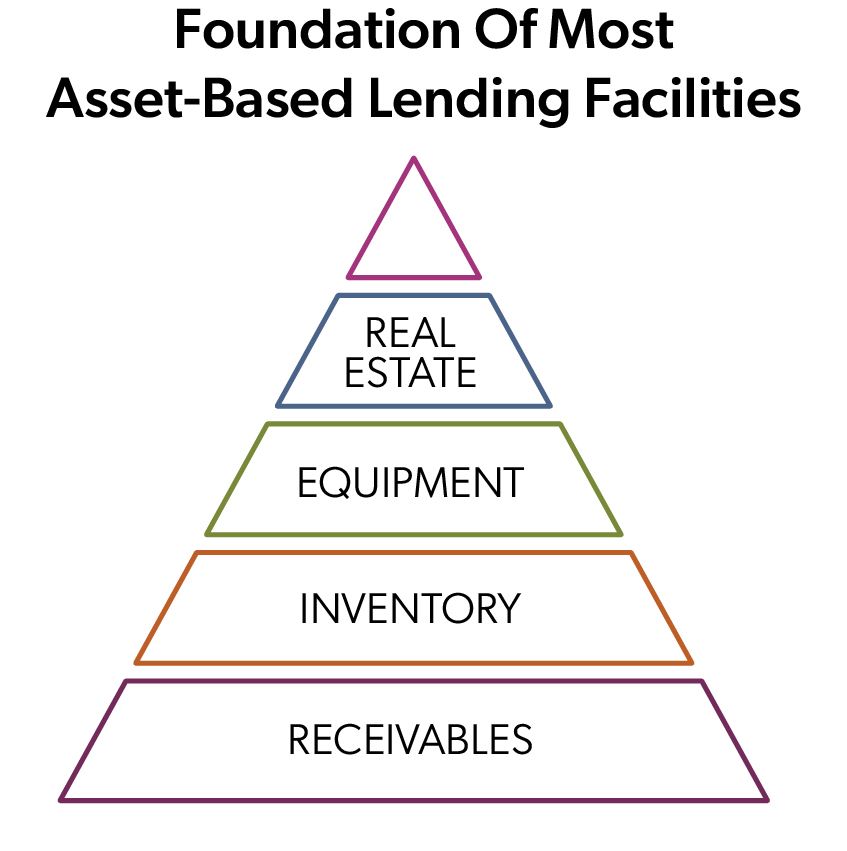 Accounts receivable. Receivables form the foundation of most asset-based lending facilities. Frequent reporting and borrowing base certificates give lenders a near real-time view of available collateral, allowing borrowing availability to adjust as receivables change. This high-touch approach is supported by specialized systems and dedicated account officers who typically manage eight to 10 client relationships, compared to dozens at many conventional banks.
 - Inventory. Inventory is commonly included alongside receivables to increase borrowing capacity. Like receivables, inventory values are monitored through regular reporting to reflect changes in the borrowing base.
- Equipment. Equipment is typically financed through a term loan layered onto the revolving working capital facility, allowing businesses to finance both ongoing operating needs and long-term assets within the same capital structure.
- Real estate. Many bank-owned asset-based lenders prefer to leave real estate financing to another lender. First Business Bank can often incorporate owner-occupied commercial real estate into the facility when the property supports the overall credit structure. Location and property type remain important considerations. Standard industrial and commercial buildings generally offer greater flexibility than highly specialized facilities, which can be more difficult to repurpose if sold.
Timeline, Pricing, And What To Expect From Asset-Based Lending
Every financing transaction follows its own timeline, but preparation plays a significant role in how quickly a facility can close. Once First Business Bank receives a complete financial package and a proposal is accepted, most asset-based lending facilities close within approximately 45 days. Straightforward transactions can close in as little as 30 days, while facilities involving real estate, subordinated debt, or multiple third parties often require additional time.
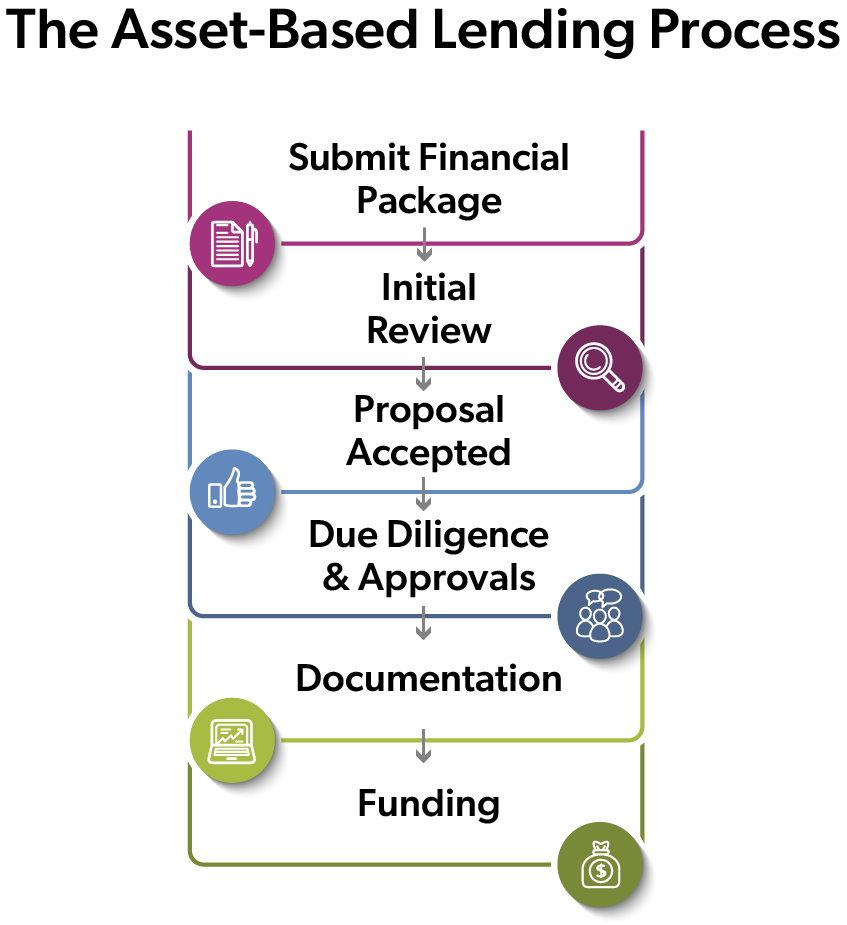 A complete package typically includes year-to-date financial statements, three years of historical financials, accounts receivable and accounts payable aging reports, an inventory listing, monthly financial projections, and background information about the business. Providing complete information upfront helps streamline underwriting and identify potential issues early in the process.
Business owners are often surprised that asset-based lending carries a relatively modest premium over conventional bank financing. Depending on the complexity of the transaction, pricing commonly ranges from approximately 50 to 100 basis points above traditional bank financing, with more complex or distressed situations reflecting additional risk.
Pricing is only one consideration. Asset-based lending also involves more frequent reporting and ongoing communication than conventional financing. Businesses typically provide monthly financial statements along with more frequent reporting on receivables and inventory, ranging from weekly to monthly depending on the facility. Periodic collateral examinations, generally one to three times per year, help confirm collateral values and keep the financing aligned with the business.
For many companies, staying on top of this kind of reporting also maintains a level of discipline that ownership often comes to highly appreciate. The increased visibility helps both the lender and the business respond more quickly as conditions change.
What Industries And Business Types Fit Asset-Based Lending?
Many businesses seeking business transition financing have substantial working capital, equipment, or real estate that supports an asset-based lending facility. While every opportunity is evaluated individually, certain business models are a more natural fit than others.
Strong candidates include:
- Manufacturers
- Distributors
- Wholesalers
- Select service businesses with substantial accounts receivable
Businesses that are typically a less natural fit include:
- Contractors
- Real estate developers
- Service businesses with limited hard assets
- Franchise concepts, where much of the business value is tied to the franchise rather than collateral that supports an asset-based lending facility
Some businesses that fall outside a traditional asset-based lending profile may still qualify for other financing solutions. For example, companies with strong accounts receivable but limited inventory or equipment may be better served by accounts receivable financing. Working with a lender that offers multiple specialty finance solutions helps businesses and referral partners identify the structure that best fits the situation.
What Referral Partners Should Know About Asset-Based Lending
Business transition financing is often driven by a specific event rather than an ongoing financing need. An acquisition, ownership transition, restructuring, or bank exit creates a window where the existing capital structure no longer fits the business. As a result, most asset-based lending opportunities originate through referral partners who are already helping companies navigate those transitions.
Turnaround consultants, investment bankers, attorneys, private equity groups, and bank workout teams often recognize when a business has outgrown its financing or needs a different lending structure. Bringing in an asset-based lender early gives everyone more flexibility to evaluate options before time becomes a constraint.
A complete financial package also helps move the process forward. Year-to-date and historical financial statements, accounts receivable and accounts payable aging reports, inventory listings, financial projections, and background on the business provide the foundation for evaluating the opportunity. More complex capital structures involving subordinated debt or specialized real estate typically require additional coordination and time.
Referral partners should also recognize that asset-based lenders differ significantly in how they structure transactions and work with clients. Lenders vary in their approach, experience, and level of service. Businesses benefit from working with a lender that communicates proactively, works collaboratively with management and advisors, and remains focused on helping the business move successfully through the transition.
Why Businesses Stay With Asset-Based Lending After Transitions
Many businesses turn to asset-based lending during a period of transition. When conventional financing becomes available again, some return to a traditional banking relationship. Others choose to stay.
For many business leaders, the decision extends beyond pricing or borrowing capacity. They value working with a lender that understands their business, communicates proactively, and continues supporting the company through changing business cycles. That consistency can be especially valuable in cyclical industries, where leaders often remember how their lender responded during previous downturns.
Businesses that prefer to return to conventional financing can do that, too. Business transition financing is designed to provide the right capital structure at the right time, whether the relationship lasts a few years or much longer.
Business transitions are a normal part of a company's life cycle, and the financing structure should reflect the realities of the business at every stage. Whether the need stems from an acquisition, ownership transition, rapid growth, restructuring, or another significant change, business transition financing helps companies maintain momentum when conventional financing may no longer be the right fit.
Asset-based lending is built around what a business owns, not solely what it has recently earned. By aligning financing with the company's assets and long-term potential, businesses can move forward with greater flexibility and confidence.
If your business, or a client's business, is entering a period of transition, contact First Business Bank's Asset-Based Lending team to discuss whether asset-based lending is the right financing structure.
Frequently Asked Questions About Business Transition Financing And Asset-Based Lending
Is asset-based lending only for distressed businesses?
No. Many businesses use asset-based lending to finance acquisitions, ownership transitions, rapid growth, or other business transitions. While some companies seek asset-based lending during a restructuring, many are financially healthy and simply require a financing structure that better aligns with their assets and capital needs.
How long does it take to close an asset-based lending facility?
Once a proposal is accepted and a complete financial package is received, many facilities close in approximately 45 days. Simpler transactions may close in as little as 30 days, while facilities involving real estate, subordinated debt, or multiple lenders often take longer.
What assets can support an asset-based lending facility?
Accounts receivable typically form the foundation of an asset-based lending facility. Depending on the business, inventory, equipment, and owner-occupied commercial real estate may also be included to increase borrowing capacity.
Can a business return to conventional financing after using asset-based lending?
Yes. Many businesses transition back to conventional financing once their financial profile aligns with traditional lending guidelines. Others choose to remain with asset-based lending because they value its flexibility and relationship-driven approach.
What types of businesses are the best fit for asset-based lending?
Asset-based lending is often a strong fit for manufacturers, distributors, wholesalers, and other businesses with substantial working capital or tangible assets. Businesses with limited collateral may be better served by another financing solution.
Update date: 10/14/2026