


Business owners often approach their banks and the commercial loan process expecting something similar to securing a consumer loan for a home or a car. That's rarely the case, and the mismatch in expectations can cost time and create frustration.
The commercial loan process differs from consumer lending in a fundamental way: there are no hard rules or ratios that automatically make a loan acceptable or unacceptable. Commercial lending is a structured combination of information gathering, financial analysis, and informed decision-making, and every business has a unique story.
Below we outline the commercial loan process for new clients. Established clients often work through a streamlined version. The rigor reflects that banks are highly regulated, they lend depositors' and shareholders' money, and there's little room for poor loan decisions. That's why commercial loans rely on several sources of repayment, including cash flow, collateral, and guarantors. To analyze those, your banker needs to understand your business.
What Do Banks Evaluate In Commercial Loan Underwriting?
Commercial loan underwriting comes down to five connected areas of focus:
- Meeting with company management
- Background of your company's industry
- Company credit needs, current and proposed
- Company history
- Company financials
Each area helps bankers write the commercial loan analysis to support a decision. Knowing what banks look for in each area helps business owners represent their business clearly and concisely, which speeds up the process and can improve the outcome.
What Happens During The Initial Commercial Loan Meeting?
The bank's due diligence starts with a conversation to understand ownership structure, management depth, products, markets, finances, and how the business positions itself competitively.
Bring these financial materials to support the discussion:
- Year-end balance sheets and income statements for the past three years
- The most recent interim financials, along with corresponding statements from the prior year and the annual budget
- Business tax returns if year-end statements are unaudited
- Accounts receivable aging and possibly accounts payable aging
- Personal financial statements and personal tax returns, since owners typically personally guarantee debt for most privately held businesses
When possible, arrange a facility tour at this stage. Walking through the company’s building and seeing its operations shows a banker things financial statements can't, including how well equipment is maintained, how inventory is managed, and how the working environment functions.
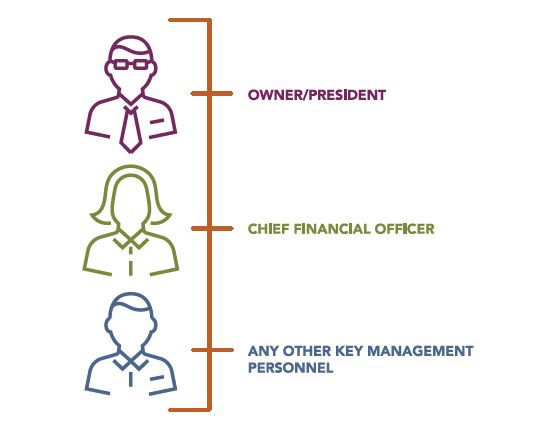 During this conversation, the bank also assesses the management team and their experience, including who else holds key responsibilities, how long they've been with the company, and their experience. When a business depends heavily on one person, that concentration is a risk, and it may lead to conversations about key person life insurance.
Bringing the right people to the initial commercial loan meeting gives the banker a complete picture of how the business operates day to day. Beyond the owner, consider including key leaders who can speak to financial performance, operations, and strategy.
Why Do Commercial Bankers Specialize By Industry?
Every industry has unique needs, risks, and trends. Bankers who understand those nuances build a more accurate picture of a company's health and outlook, which leads to better-structured loans and stronger long-term relationships.
A banker fluent in industry-specific terminology communicates more precisely with clients, which makes the process more efficient. Banks like First Business Bank that organize around industry practice groups bring deeper expertise across multiple sectors, giving clients a team that recognizes what's normal, what's a red flag, and what's an opportunity.
Industry-specific expertise helps bankers mitigate potential risk, anticipate issues, and help clients maximize revenue opportunities.
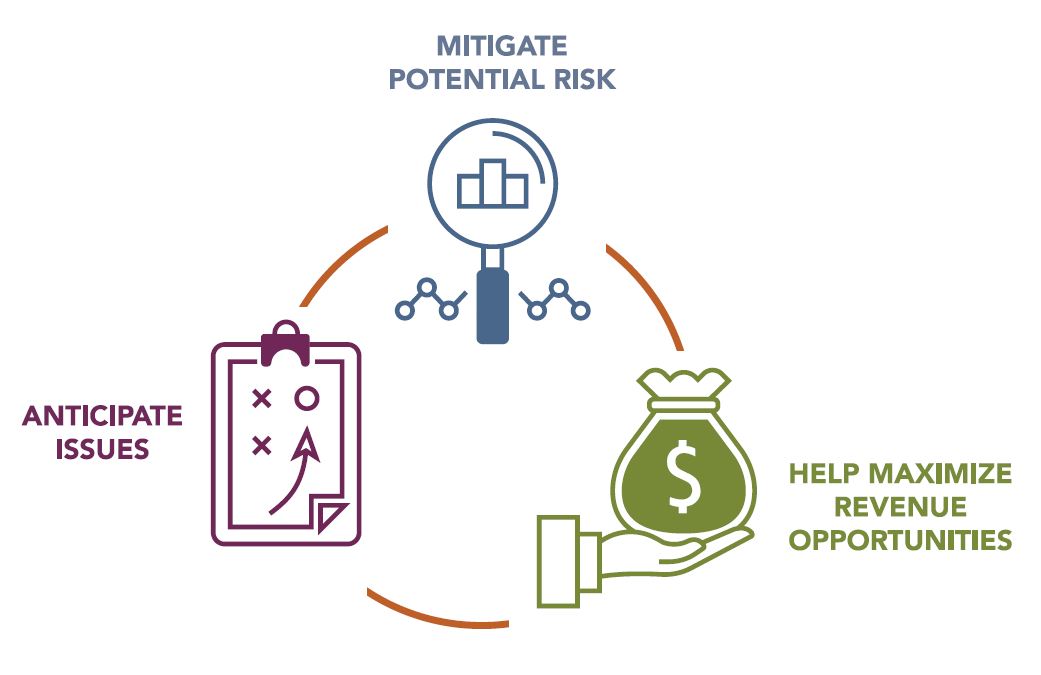 Bankers who specialize in an industry add value by:
- Building knowledge of industry best practices and using that experience to guide clients
- Developing networks within the industry that help clients grow
- Drawing on familiarity with payment cycles, sales cycles, equipment needs, and capital requirements to recommend financing structures that fit
When a banker doesn't know an industry, they spend time researching trends, threats, and norms, sometimes even contacting customers or vendors directly, which slows the process. A banker who already understands the industry can move faster and often spots opportunities the borrower might not have considered.
Read more about Why Your Bank’s Industry Experience Matters.
How Banks Analyze Commercial Loan Credit Needs
Bankers pull information from outside credit sources to verify historical payment performance for both the business and any guarantors. Uniform Commercial Code (UCC) searches help to identify whether other creditors hold existing lien positions on company assets. All of this feeds into a written commercial loan analysis, which becomes the document decision-makers review when approving or declining a loan.
The credit structure plays an important role. Working capital needs driven by growth fit a line of credit with interest-only payments, while longer-term assets like equipment or real estate match better with an amortizing term loan. A clear schedule of sources and uses for the transaction helps clarify the credit need and demonstrates that the borrower has thought through the structure.
Bankers also weigh forward-looking analysis carefully. Stress-testing debt service coverage against higher interest rates and running sensitivity analysis on revenue projections is now standard practice, particularly for capital-intensive or cyclical businesses. Borrowers who bring realistic projections and can explain the assumptions behind them often move through the commercial loan process faster. 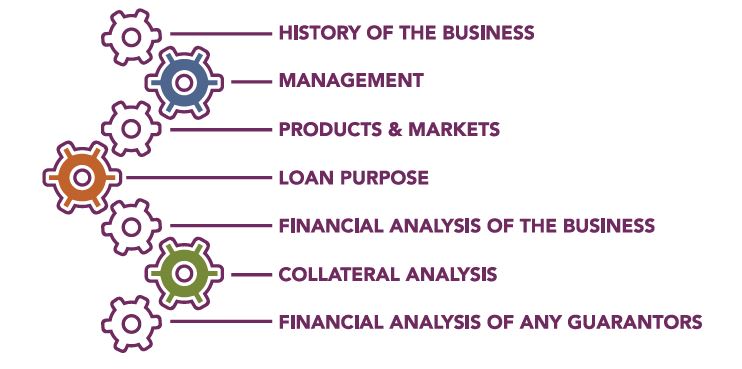
What Do Commercial Bankers Look For In A Business?
A company's history gives bankers insight into its evolution, longevity, and the patterns that shape its future. Ownership structure also matters. Sole proprietorships, S corporations, and LLCs each require different financial information and influence how commercial loans should be structured.
Bankers dig into the product and market to answer several key questions:
- What does the company do, and how does it differentiate from competitors? Is it positioned as a low-cost provider, or does it compete on quality, service, or speed?
- Who are the major competitors, and what barriers exist for new entrants?
- Who are the major customers, and what industries do they serve? Is there meaningful concentration risk?
- How are sales generated, whether through inside sales, outside reps, or distributors?
- Are revenues cyclical or seasonal, and how should that shape loan structure and payment requirements?
Supply chain concentration and customer concentration are also concerns. Businesses that rely heavily on a single supplier or a narrow set of vendors carry risks that become problematic during global disruptions. Bankers now routinely ask how a business handles it when a key supplier fails or raw material costs spike.
Working through these questions helps identify potential risks and how to mitigate them, which informs both the credit decision and the loan structure.
How Do Banks Analyze Financial Statements For Commercial Loans?
Banks use specialized credit analysis platforms to spread financial statements across multiple periods, identifying trends, significant changes, and key financial ratios. The depth of analysis depends on the industry and the company's life cycle, whether it's a young business, a recent acquisition, or a fast-growing operation.
Two ratios from the balance sheet sit at the heart of most reviews:
- Current ratio or working capital. Current assets divided by current liabilities measures the ability to meet short-term obligations. Working capital, calculated as current assets minus current liabilities, tells a similar story in dollar terms.
- Debt-to-worth ratio. Total liabilities divided by net worth measures leverage. What's acceptable depends on the industry and where the company sits in its life cycle.
Bankers also track days outstanding for accounts receivable, inventory, and accounts payable against industry norms and prior periods. Significant variances often point to collection issues, inventory problems, or cash flow strain, and they call for explanation.

Beyond ratios, bankers compare gross profit margins and operating expense levels to industry averages. Borrowers should be ready to explain meaningful changes, such as gross margins compressing because of expansion into new geographic markets, or rising raw material costs that took time to recover through pricing contracts.
Cash flow is the primary source of debt repayment. It differs from earnings because non-cash items like depreciation and amortization, balance sheet changes like growing receivables and inventory, and other debt payments all factor in. Bankers analyze historical, current, and projected cash flow to assess the ability to service debt while still meeting capital expenditure needs and other obligations.
A key ratio that bankers review that includes both the balance sheet and income statement, is debt to EBITDA. This measures how many years it will take to pay off all company debt. The lower the number, the less risk of debt repayment, which results in more favorable terms and pricing.
Collateral provides a secondary source of repayment if cash flow falls short. Banks apply discounted values to company assets, often supported by appraisals on real estate and equipment, and generally won't lend beyond those discounted values without a strong guarantor.
Guarantor strength is the final piece. Bankers look at personal liquidity, including cash and marketable securities, alongside personal cash flow that accounts for required personal debt service. Liquid guarantor assets can cover temporary cash flow shortages or serve as a secondary repayment source on unsecured or under-collateralized loans.
How Does Your Banking Relationship Affect Commercial Lending Decisions?
Banks evaluate the full relationship, including deposits, treasury management services, and credit, when assessing a commercial loan request and structuring terms.
This matters because a business that holds its operating accounts at the same bank gives the banker real-time visibility into cash flow patterns, which informs underwriting and ongoing monitoring. Treasury management services like fraud controls, payables automation, and liquidity management also reduce operational risk, which factors into how a banker views the overall relationship. And a deeper banking relationship often means faster decisions on credit modifications, line increases, or new facilities down the road, because the bank already understands how the business operates.
For borrowers comparing banks, this is worth evaluating along with rate and structure. A bank that approaches the relationship holistically tends to be a more responsive partner over the long term than one that treats credit and operating services as separate transactions.
How Long Does The Commercial Loan Process Take?
The timeline for a commercial loan varies based on loan size, complexity, and how prepared the borrower is. For new clients, the process typically runs 30 to 90 days from initial conversation to funding, with more complex deals stretching longer. The more organized the company and information is, the shorter the timeline is.
Several factors can speed things up. Complete financial documentation submitted upfront eliminates back-and-forth requests. Realistic projections supported by clear assumptions reduce questions during underwriting. As previously stated, established banking relationships often shorten the timeline. Third-party requirements like appraisals, environmental reports, and legal reviews often set the pace on real estate transactions, so starting those early keeps the process moving.
How Are Commercial Loan Decisions Made?
There are issues to address even with strong companies. Business longevity, management depth, competitive threats, customer concentration, or unusual items on the financial statements all factor into the final loan structure. Decision-makers weigh the strengths against the risks and propose loan terms to address what they find.
This is where the banker and the loan committee earn their value. A well-structured commercial loan reflects the realities of the business, supports its growth plans, and protects both the borrower and the bank over the life of the relationship. By working with First Business Bank, your access to decision makers provides an enhanced experience due to transparency and efficiency throughout the entire process.
Frequently Asked Questions About The Commercial Loan Process
What credit score do banks look for in a commercial loan?
Commercial lenders don't rely on a single credit score the way consumer lenders do. They pull credit history for both the business and its guarantors to evaluate payment patterns, but that's one factor among many. Cash flow, collateral, industry context, and management strength all carry significant weight. A business with a complicated credit history but strong financials and a clear repayment story may still qualify, which is why preparation and context matter more than a specific number.
What documents do banks require for a commercial loan?
Banks generally require three years of year-end balance sheets and income statements, recent interim financials, business tax returns if statements are unaudited, accounts receivable aging, and personal financial statements and tax returns for owners who will personally guarantee the loan.
What's the difference between commercial and consumer lending?
Consumer lending follows hard rules and ratios that determine approval. Commercial lending uses judgment-based analysis of cash flow, collateral, guarantors, industry context, and management strength. There's no single formula, which is why preparation and a strong banking relationship matter so much.
Updated: August 4, 2026