For many business owners, their company represents decades of hard work, relationships, and personal investment. When it's time to transition ownership, they want a strategy that provides financial security while preserving the business, its employees, and the legacy they've built.
An Employee Stock Ownership Plan (ESOP) can help business owners achieve those goals by creating a path for employees to become owners. But while much of the conversation focuses on the ESOP itself, financing is what makes the ownership transition possible. Understanding how ESOP financing works is essential because it determines how the ownership transition is funded, how the transaction is structured, and whether it supports your long-term succession goals.
What Is ESOP Financing?
ESOP financing is a form of business succession financing that allows a company to purchase some or all of a business owner's shares over time. In this type of financing structure, the company obtains a loan (not the employees) to purchase the shares of the existing owners and repays it using future cash flow. This approach can help business owners transition ownership while providing liquidity and creating an employee ownership structure designed to support the company's long-term success.
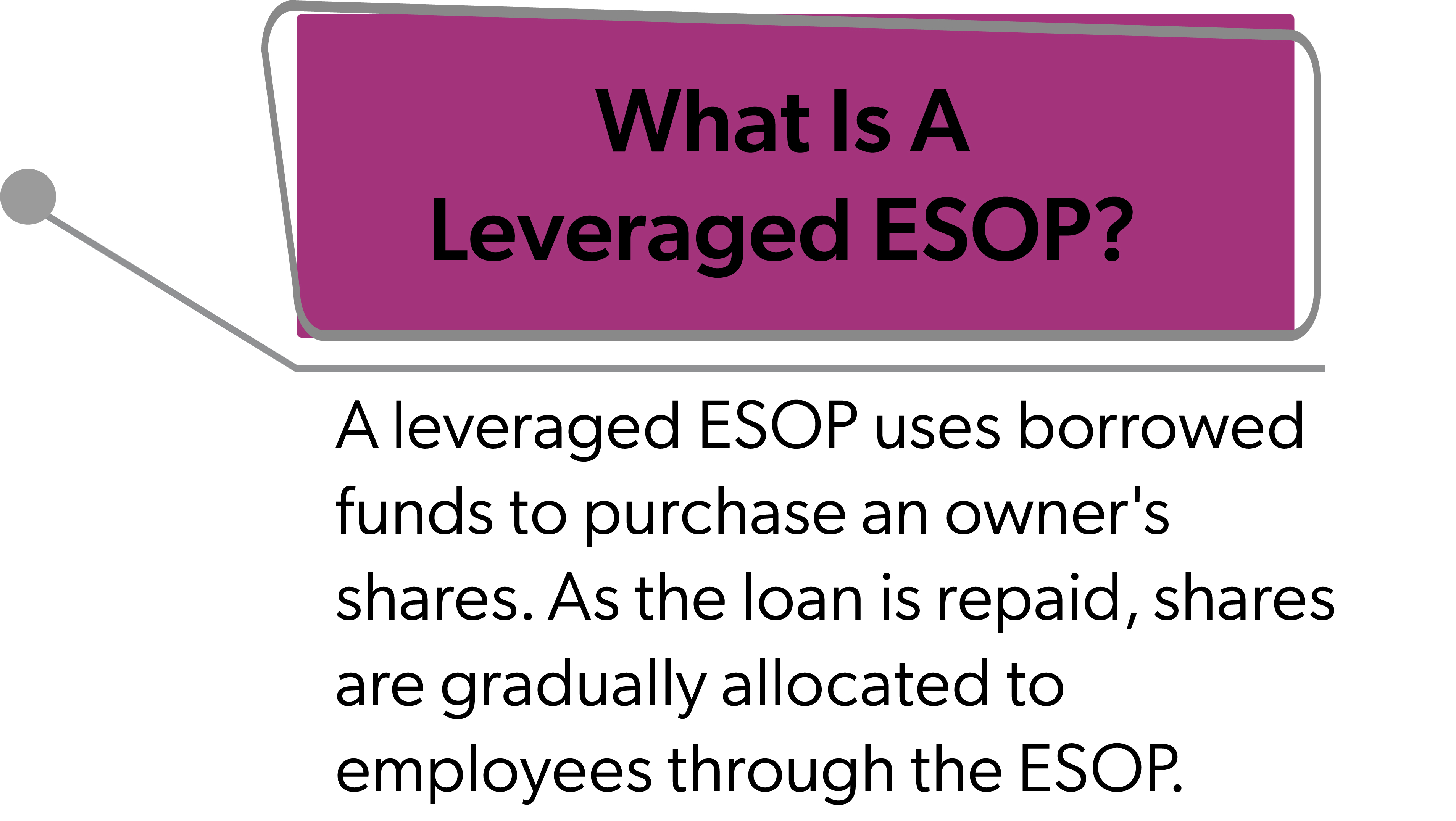 Most ESOP transactions use a leveraged ESOP because it provides the capital needed to complete an ownership transition. A non-leveraged ESOP builds employee ownership through ongoing contributions of cash or company stock instead of borrowed funds. The right approach depends on the company's financial position and the owner's succession objectives.
ESOP financing also offers flexibility in the amount of ownership transferred. Some business owners sell a minority interest first to create liquidity while retaining control of the company. Others complete a full ownership transition through an ESOP. The structure depends on the owner's goals, the company's financial position, and the long-term succession plan.
How Does ESOP Buyout Financing Work?
Most ESOP transactions use a combination of financing sources to complete the purchase of a business owner's shares. While every transaction is structured differently, the financing typically includes three primary components that work together to fund the ownership transition.
Senior bank debt. A commercial lender typically provides the primary source of financing, often funding a significant portion of the purchase price. The company repays the loan over time using future cash flow, making senior debt the foundation of most leveraged ESOP transactions.
Seller note. Many ESOP transactions also include a seller note for a portion of the purchase price. Instead of receiving all proceeds at closing, the seller finances part of the transaction and is repaid over time. This approach can help bridge the gap between the purchase price and the amount a lender is willing to finance while providing additional flexibility in the transaction structure.
ESOP trust. The ESOP trust purchases and holds company shares on behalf of employees. As the financing is repaid, shares are gradually allocated to eligible employee accounts according to the plan's allocation formula.
The exact financing structure varies from one transaction to another. In many ESOP buyouts, senior bank debt funds most of the purchase price, while the seller note provides the remaining capital needed to complete the transaction. An experienced ESOP lender works with the business owner and advisory team to structure financing that supports the company's cash flow and long-term ownership goals.
Tax Advantages of ESOP Funding Solutions
One of the biggest advantages of ESOP financing is the potential tax treatment. Depending on the company's structure and the transaction, ESOP financing may provide tax benefits for both the business and the selling owner.
- Deductible loan repayment: One of the key advantages of a leveraged ESOP is that contributions used to repay the ESOP loan, including amounts applied to both principal and interest, are generally tax-deductible. Because debt principal is not typically deductible, this can provide a significant cash flow advantage.
- S corporation tax exemption: The ESOP-owned portion of an S corporation's earnings is generally exempt from federal income tax. A company that is 100% owned by an ESOP generally pays no federal income tax on its earnings, allowing more cash flow to support the business and repay acquisition debt.
- Section 1042 rollover for C corporations: Owners of C corporations who sell at least 30% of the company to an ESOP may be able to defer capital gains taxes by reinvesting the proceeds in qualified replacement property (QRP). This strategy has specific eligibility requirements and should be evaluated with a qualified tax advisor.
Because every ESOP transaction is unique, business owners should work with qualified tax and legal advisors to understand how these rules apply to their specific situation.
ESOP Financing vs. Other Exit Strategy Financing Options
Business owners have several options when planning an ownership transition, and each comes with its own financial, operational, and cultural considerations. The right choice depends on the owner's goals, timeline, and vision for the company's future.
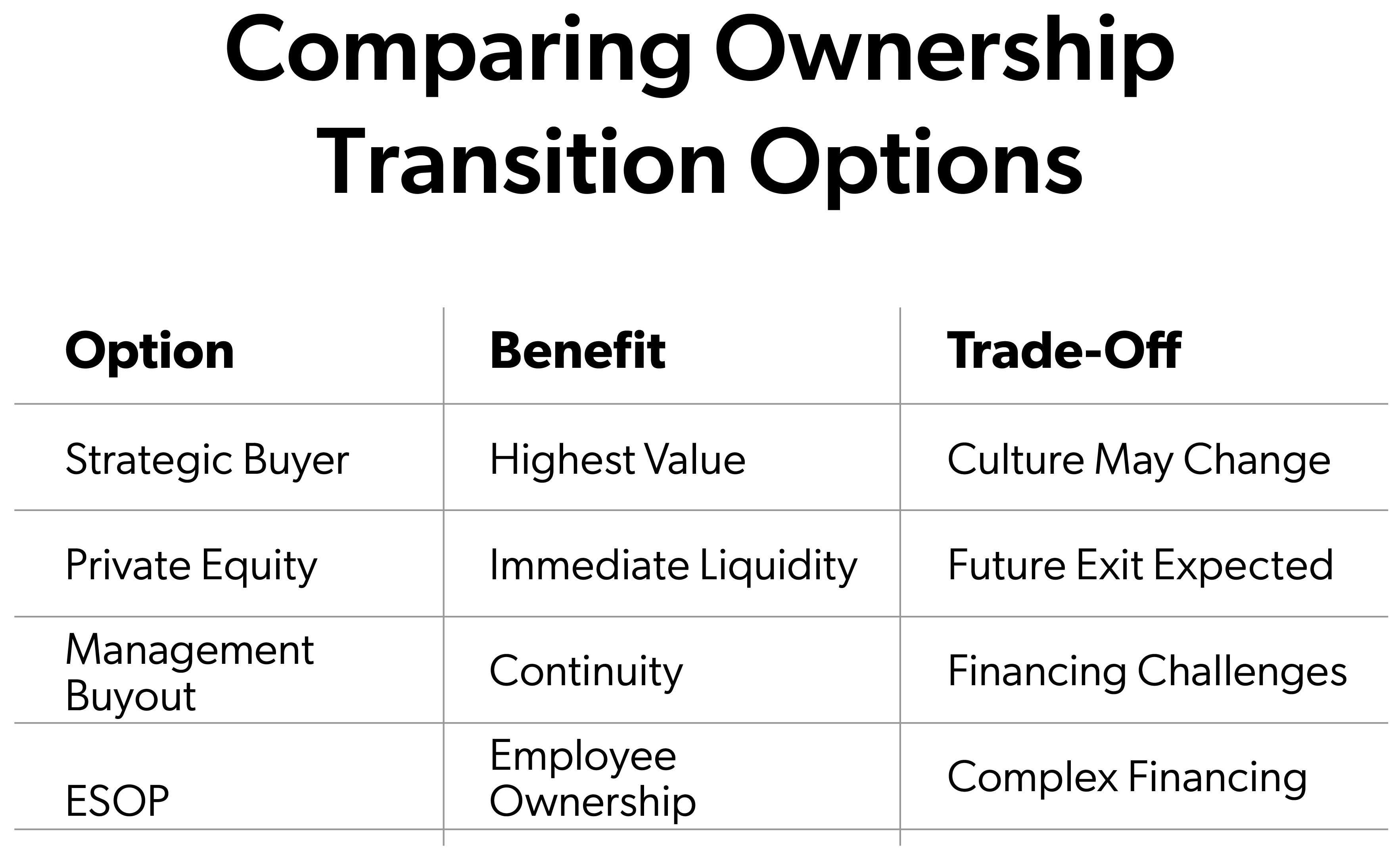 Strategic buyer. Selling to a strategic buyer often provides the highest immediate purchase price because the buyer may realize operational efficiencies or expand its market position through the acquisition. However, ownership, leadership, and company culture may change after the sale, and long-term opportunities for existing employees can vary.
Private equity. Private equity can provide significant liquidity while allowing owners to remain involved in the business. In many cases, the investment is part of a broader growth strategy that includes an eventual second sale or recapitalization. Business owners considering this option should understand the long-term expectations for ownership, the potential effect this type of acquisition has on employees, and future exit planning.
Management buyout. A management team may have the experience and commitment to continue leading the company but lack the capital to purchase the business independently. ESOP financing can provide an alternative path by making an ownership transition possible without requiring individual managers to finance the acquisition themselves.
ESOP with bank financing vs. seller financing. Some ESOP transactions rely primarily on seller financing, while others use third-party financing from an experienced commercial lender. Bank financing often allows the selling owner to receive a larger portion of the purchase price at closing while reducing the amount of capital tied up in the business after the transaction. Seller financing remains an important component of many ESOP transactions but combining it with senior bank debt can create greater flexibility in structuring the ownership transition.
The best ownership transition strategy depends on each business owner's priorities. For owners who want to preserve company culture, reward employees, maintain leadership continuity, and establish a defined path to liquidity, ESOP financing can provide a compelling combination of financial and long-term business benefits.
Is Your Business Ready for Ownership Transition Financing?
Every ESOP transaction is unique, but lenders evaluate several common factors when determining whether a business is well positioned for ESOP financing, including:
Consistent cash flow and debt service capacity. The business must generate sufficient cash flow to repay acquisition debt while continuing to support day-to-day operations. Lenders carefully evaluate historical performance and projected cash flow to determine the company's ability to service the financing.
An experienced management team. A strong leadership team gives lenders confidence that the business will continue to perform after the ownership transition. If the selling owner is responsible for most operational or customer relationships, succession planning becomes an important part of the financing discussion.
Organized financial records and governance. Well-prepared financial statements, a clear ownership structure, and sound corporate governance help streamline the financing process. Addressing legal or financial issues before pursuing an ESOP can reduce delays and improve transaction efficiency.
A supportable business valuation. An independent valuation helps establish the fair market value of the company. Lenders evaluate that valuation alongside the company's earnings and cash flow to determine an appropriate financing structure.
Time to plan the transition. ESOP transactions typically take 12 to 18 months from initial planning through closing. Starting the process early gives business owners more flexibility to assemble the right advisory team, evaluate financing options, and structure a successful ownership transition.
The Bank's Role in Owner Buyout Financing
An experienced lender does more than provide capital for an ESOP transaction. The bank works with the business owner and advisory team to structure financing, evaluate cash flow, and help create a transaction that supports both the ownership transition and the company's long-term financial health.
In addition to underwriting the senior debt, the lender coordinates with the ESOP trustee, valuation firm, attorneys, and other advisors throughout the financing process. Because ESOP transactions involve specialized considerations, including future repurchase obligations and ongoing cash flow planning, working with a lender that understands these complexities can help the process move more efficiently.
When evaluating a financing partner, business owners should look for experience with ESOP transactions, a thorough understanding of ownership transition financing, and an established network of advisors who regularly work together. An experienced ESOP lender can identify potential challenges early, recommend practical financing structures, and help keep the transaction on track from initial planning through funding.
ESOP financing gives business owners a practical way to transfer ownership while preserving the company, rewarding employees, and creating a path toward long-term financial security. With the right financing structure, an ESOP can provide liquidity for the selling owner while supporting the continued success of the business.
Like any ownership transition, planning is critical. Starting the conversation early gives business owners time to evaluate their options, assemble the right advisory team, and structure financing that aligns with their long-term goals. An experienced banking partner can help guide the financing process and coordinate with the other professionals involved to support a successful transition.
If you're considering an ESOP as part of your business owner transition strategy, First Business Bank's experienced team can help you evaluate your financing options and determine whether an ESOP is the right fit for your business.
Update date: 11/12/2026
Frequently Asked Questions About ESOP Financing
What size business is a good fit for an ESOP?
There's no strict employee or revenue minimum, but ESOPs tend to work best for privately held companies with consistent cash flow and enough payroll to support the ongoing costs of running a retirement plan. Cash flow strength and succession goals matter more than headcount alone.
What is the repurchase obligation, and how does it affect financing?
As employees retire or leave the company, the ESOP is generally required to buy back their vested shares. This creates a future cash obligation that grows as the plan matures. Lenders who specialize in ESOP financing typically factor this obligation into the loan structure so the company can plan for it well in advance.
Does selling to an ESOP mean giving up control of the company?
Not necessarily. Many business owners sell a minority stake first and retain board involvement or a leadership role during the transition. Even in a full sale, the timeline for repaying acquisition debt often allows for a gradual handoff rather than an immediate exit.
Who technically owns the company's shares after an ESOP transaction?
The ESOP trust holds the shares on behalf of employees. Individual employees don't hold stock directly; instead, they earn a beneficial interest in the plan that's allocated to their accounts over time and vests according to the plan's schedule.
Can an ESOP be combined with a partial sale to a private equity firm or strategic buyer?
Some business owners structure a two-step transition, selling a portion of the company through an ESOP first and pursuing a sale to an outside buyer later. The right sequence depends on the owner's timeline, liquidity needs, and long-term goals for the business.
Does an ESOP transaction affect a company's existing credit facilities?
Lenders structuring ESOP financing typically evaluate it alongside a company's current debt and credit lines to confirm the business can service both. Coordinating with the company's existing bank early in the process helps prevent conflicts between the new financing and existing agreements.