

 The largest generational wealth transfer in American history, the Great Wealth Transfer, is underway as baby boomers shift more than $84 trillion to younger generations over the next two decades. While baby boomers often are stereotyped as less adept with digital tools, our experience working with clients shows they're thoughtfully adopting specific technologies when they see clear value, especially tools that help protect their families and simplify complex financial processes.
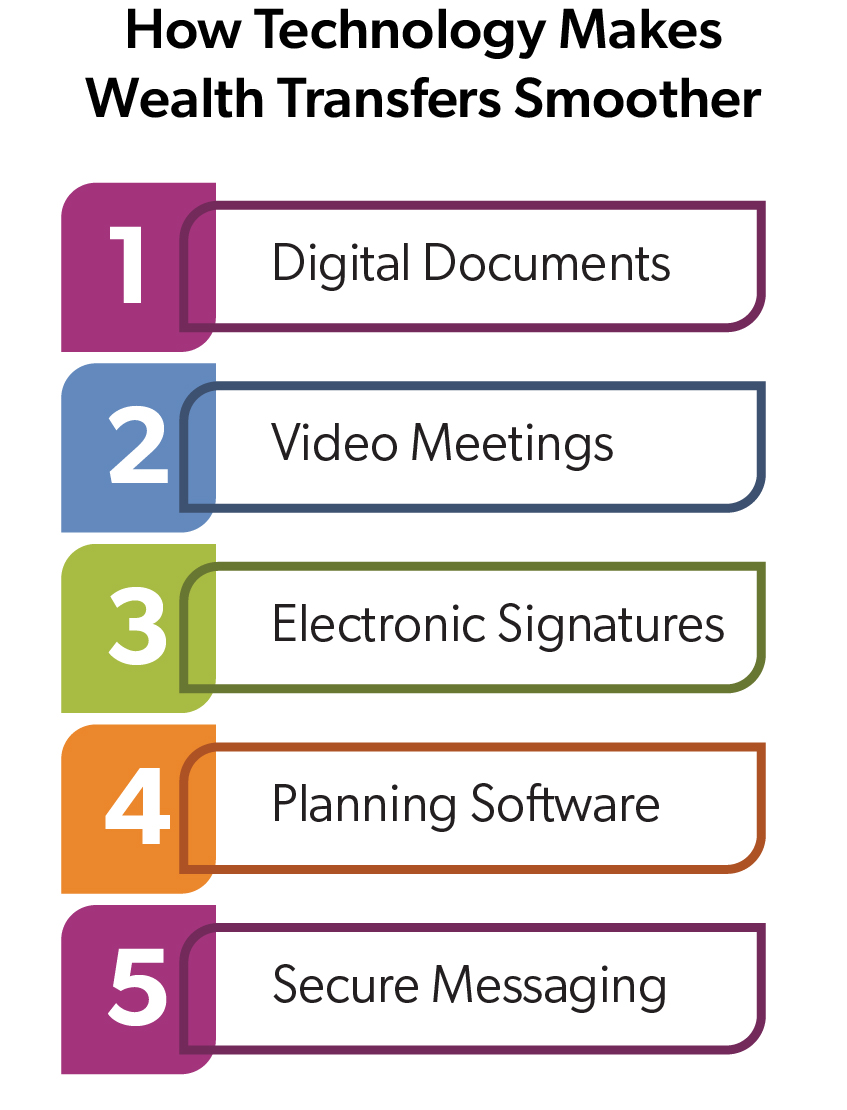
We’ve identified five ways technology is making the Great Wealth Transfer smoother, more secure, and more successful for families. We hope this list helps families navigate their estate transfer process with greater confidence and coordination.
1. Digital Document Management Prevents Lost Paperwork
Clients who once stored estate documents in filing cabinets now maintain secure digital vaults. The appeal comes from the peace of mind that knowing important papers won't be lost and trusted family members can access them immediately when needed.
Digital systems ensure the most current versions of trusts, powers of attorney, and beneficiary designations remain accessible. Families avoid the stress of wondering whether they've found the right document version or missed an important account. This prevents the document hunts that survivors often face after losing a loved one.
2. Video Conferencing Connects Scattered Families
Families scattered across different states can now participate in estate planning meetings together. We regularly host family meetings where grandparents in Florida connect with adult children in Wisconsin and grandchildren in California—all reviewing the same financial plan in real time.
When family members live in different time zones, technology facilitates ongoing communication rather than rushed conversations during crisis moments. Video calls allow distant family members to participate and improve transparency and trust across generations.
3. Electronic Signatures Eliminate Administrative Hassles
Remember when signing legal documents meant coordinating schedules with multiple parties—then driving across town hoping everyone showed up? Now families can review and sign many important documents from home.
This shift matters more during estate transitions than people realize. When emotions run high and family members live in different states, electronic signatures remove logistical barriers that could delay critical decisions. Adult children can review and approve trust amendments without flying home. Spouses can sign financial documents while traveling.
The technology also reduces errors that happen when people rush through paperwork. Families have time to read documents carefully, ask questions, and make informed decisions rather than feeling pressured to sign quickly because everyone's schedules finally aligned for one afternoon.
4. Financial Planning Software Encourages Family Wealth Discussions
Software like Money Guide Pro handles interactive scenario planning during family meetings. Parents and adult children can explore "what if" questions together, like retirement timing, major purchases, and charitable giving, to see how different decisions affect long-term financial security.
This technology handles routine calculations and projections, freeing up time for the meaningful conversations that determine whether wealth transfers strengthen family relationships or create lasting tensions. Families can model different scenarios in real time rather than waiting weeks for updated plans.
5. Secure Communication Platforms Track Wealth Planning Decisions
Secure messaging within financial platforms creates clear documentation of discussions and decisions. Document sharing platforms allow all family members and professional advisors to work from the same information. No more confusion about which version of a trust document contains the most recent amendments.
Digital estate organization creates systematic approaches to asset documentation that families can maintain over time rather than scrambling to piece together information during emergencies.
What We’ve Learned About Technology And Wealth Transfer Success
Baby boomers haven't so much rejected technology as they’ve demanded that it proves its value. In our experience, they prefer tools that solve real problems to improve human relationships, rather than replace them.
AI-driven financial planning tools and fully automated applications haven't gained widespread acceptance because most clients want human expertise to interpret data and make recommendations.
The most successful wealth transfers we've observed combine technological efficiency with human expertise. Digital tools handle routine tasks and improve access to information, while experienced advisors navigate complex decisions and family dynamics.
The Great Wealth Transfer is an opportunity for families to strengthen relationships across generations while making complex processes more manageable. The families who navigate wealth transfer most successfully use technology to improve their planning process while maintaining focus on preserving relationships, protecting family values, and ensuring financial security for future generations.