


Wire transfer fraud poses a significant threat to businesses of all sizes, with financial losses reaching the billions every year. As criminals use increasingly sophisticated tactics, including artificial intelligence (AI) to impersonate trusted contacts and manipulate financial decisions, preventing wire transfer fraud has become a critical priority for businesses and organizations.
This article provides actionable strategies and best practices to help you protect your organization from wire transfer scams.
What Is Wire Transfer Fraud And How Does It Happen?
In wire transfer fraud, criminals manipulate or deceive individuals or organizations into sending money electronically to fraudulent accounts. They target wire transfers because of the ability to send large sums quickly, and because it's often difficult to recover the funds.
Wire transfer fraud tactics are rapidly evolving. Criminals constantly change how they operate, so staying current on the latest wire transfer fraud prevention strategies is essential. What worked yesterday might not work tomorrow.
How Do Criminals Commit Wire Transfer Fraud?
Business Email Compromise (BEC): Cybercriminals infiltrate a company's email system, often through phishing attacks that appear like legitimate requests, and use compromised accounts to initiate unauthorized wire transfers. BEC scams are a primary source of wire transfer fraud, accounting for billions in losses each year according to the FBI's most recent annual crime report.
Vendor Email Compromise (VEC): Hackers gain access to a vendor's email account and use it to send authentic-looking invoices with fraudulent payment details, exploiting trusted business relationships to avoid suspicion. Read more about VEC and BEC.
Fake invoice scheme: Without accessing any accounts, scammers create and send fake invoices that look like legitimate bills but direct payments to criminal-controlled accounts.
Account takeover: Criminals gain direct access to a business's bank account, often through malware or phishing, and initiate unauthorized wire transfers. Learn more about account takeover fraud in our article.
CEO fraud: Impersonating high-ranking executives, criminals email urgent wire transfer requests to employees, demanding payment to accounts they control. Read more about impersonation fraud.
Customer impersonation fraud: Criminals pose as new customers, place orders using stolen or fraudulent payment methods, then request refunds for seemingly legitimate reasons. When the original payment is reversed as fraud, any refund the business sent, often by wire, becomes a direct, unrecoverable loss. Businesses that routinely process refunds via wire transfer are particularly exposed.
AI-enabled fraud: Criminals use artificial intelligence to clone voices and create convincing audio or video impersonations of executives, vendors, or colleagues. Deepfake tactics are often layered on top of BEC or CEO fraud, with a follow-up call using a cloned voice and spoofed phone number to reinforce fraudulent wire transfer instructions. The phone number may look authentic, so it’s especially important to hang up and call the known number to make sure you are speaking with the right person and not a scammer.
How Do I Recognize the Signs of Wire Transfer Fraud?
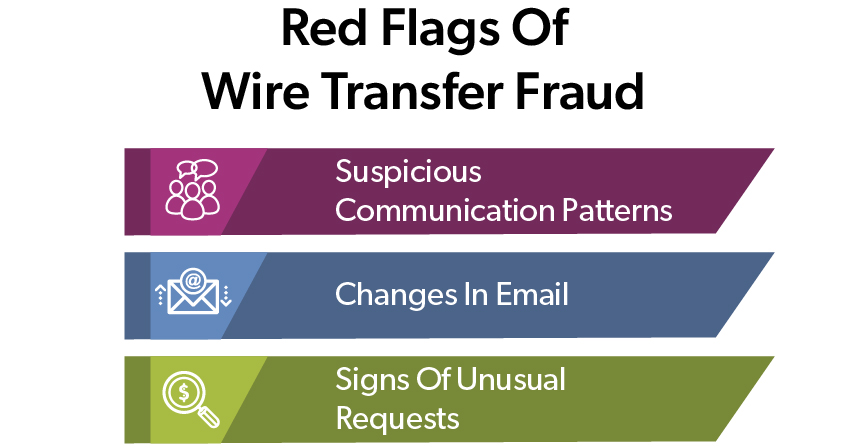 Anyone involved in financial transactions can spot the signs of wire transfer fraud. While exact methods change constantly, you can learn to recognize wire transfer scams by developing healthy skepticism and a sharp eye for suspicious patterns. Wire transfer fraud often succeeds because it exploits human traits like the desire to be helpful, trust in authority, and acting quickly under pressure. The key to preventing wire transfer scams is to stop, verify, and trust your instincts when something feels off.
There’s reason to be highly suspicious when it comes to wire transfers if communications involve:
- Urgent requests for immediate action
- Pressure to bypass standard verification and security procedures
- Unusual timing of requests (e.g., late Friday afternoons or holidays)
- Requests to keep the transaction confidential
- Unusual receiver information or changes to receiver information
How Do I Spot Fake Emails to Prevent Wire Transfer Scams?
Recognizing legitimate versus fake emails makes a real difference in preventing wire transfer fraud. Check the full email address, not the display name — criminals often use addresses that look legitimate at first glance, with subtle misspellings or slight domain variations. For example, a scammer might use "ceo@company-name.com" instead of "ceo@companyname.com." Also watch for inconsistencies in email signatures or formatting: unusual fonts, misaligned logos, missing contact information, or grammar errors should raise alarms. Be especially skeptical of free email services used for business communications.
Never rely on email alone to verify new payment instructions or changes to existing ones. Instead:
- Call the sender using a known, previously verified phone number — as one layer of verification, not the sole confirmation. Given the rise of AI voice cloning, voice alone is no longer sufficient; confirm identity through a secondary method as well.
- Whenever possible, verify new wire transfer instructions in person or through a second independent channel.
- Use a secure company messaging system separate from email for sensitive communications.
- For vendor changes, contact your known account representative through a previously verified method, not through contact information provided in the request.
Even if an email passes these checks, stay on your guard. Sophisticated criminals can hack into legitimate accounts and send real-looking emails from within a trusted system. If something feels off, take the time to verify.
Be especially cautious and slow down the process if emailed requests involve:
- Changes to current payment procedures
- New or unfamiliar account details for regular vendors
- Requests to wire funds to countries unrelated to the business transaction
- Amounts that differ from typical transaction sizes
- Unusual receiver information, such as account name
How Do I Set Up Security Procedures to Prevent Wire Transfer Fraud?
Along with recognizing red flags, creating and following security procedures that fit your organization is essential. A knowledgeable banker can review them, as well. Here's a starting point:
Establish a clear chain of authority. Choose specific people who can initiate and approve wire transfers. Implement dual control, requiring two separate approvals for transfers above a certain dollar amount. Internal fraud is also a risk to consider when establishing your chain of authority — for guidance on protecting your business from threats within, see our article on how to prevent internal fraud.
Create a verification process. Develop a standardized procedure for verifying all wire transfer requests, including multi-factor authentication for digital approvals. Establish a callback procedure using pre-verified phone numbers and confirm identity through a secondary method beyond voice alone.
Set up system controls. Configure your banking platform to flag unusual activity, set daily limits on wire transfer amounts, and implement IP restrictions to limit access to authorized locations.
Develop written policies and procedures. Document all wire transfer processes in detail, including steps for handling exceptions or emergency situations. Review and update these policies regularly.
Train your team. Conduct regular training sessions on wire transfer security for all relevant staff. Include simulations of fraud attempts to test and reinforce protocols.
Use banking security features. Work with your bank to implement additional security measures, which may include Positive Pay, Check blocks, ACH Positive Pay, ACH blocks, Account Reconciliation, multi-factor authentication (MFA), or fraud detection services.
What Should I Do If I Suspect Wire Transfer Fraud?
Act immediately. Many banks can only attempt to recall funds within 24 hours, and in some cases that window is even shorter. Having a clear, well-practiced response plan is essential — every minute counts.
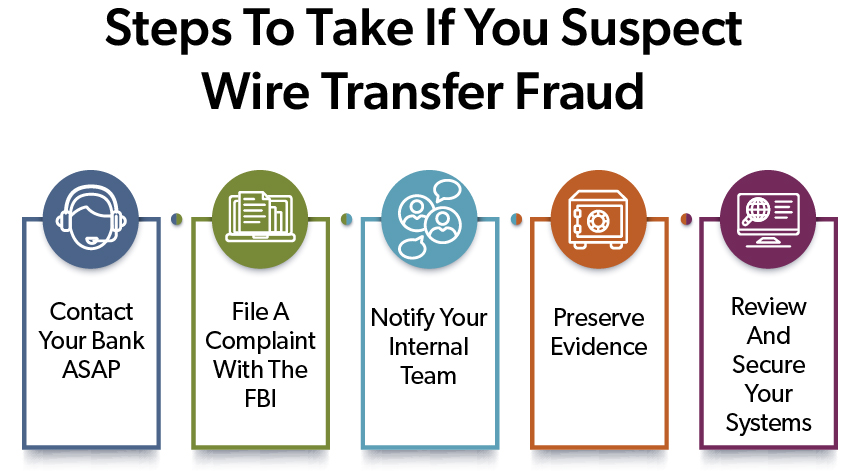 Contact Your Bank Immediately. Inform your bank of the suspected fraudulent transfer and request an immediate recall of the funds.
 - File a Complaint with the FBI. Submit a report to the FBI's Internet Crime Complaint Center (IC3) with all details of the transaction.
- Notify Your Internal Team. Alert your IT department to potential security breaches and inform executives and legal counsel who need to know.
- Preserve Evidence. Save all communication related to the fraud and document the timeline of events for the investigation.
- Review and Secure Your Systems. Change passwords and credentials, and work with your IT department to scan for malware or unauthorized access.
How Often Is Money Recovered From Wire Transfer Fraud?
The likelihood of recovery varies, and getting everything back is often difficult. Speed of detection matters most: the faster you report, the better your chances. Even with quick action, full recovery is far from guaranteed. Other factors include where the funds went (domestic vs. international) and the cooperation of receiving banks.
What Happens After Wire Transfer Fraud?
When you report wire transfer fraud, an investigation begins involving financial forensics, digital evidence gathering, and collaboration with law enforcement. For cross-border cases, international agencies may also be involved. These investigations can be time-consuming, and patience can sometimes mean partial recovery rather than a total loss.
While businesses aren't typically held legally liable for falling victim to wire transfer fraud, there can be indirect consequences including civil litigation, regulatory scrutiny, reputational damage, and loss of client trust. Strong prevention protocols demonstrate due diligence and can help mitigate these risks.
Should I Get Cybersecurity Insurance For Wire Transfer Fraud?
Prevention is always critical, but cybersecurity insurance can offer an additional layer of protection as wire transfer fraud can cause devastating financial losses. Policies sometimes cover financial losses from fraud, legal expenses, costs associated with notifying affected parties, and public relations efforts to manage reputational damage.
Work closely with your insurance partners to determine the right coverage for your organization. Cybersecurity insurance often comes with access to expert resources that can help you respond quickly in the event of a fraud attempt, potentially minimizing losses.
Wire Transfer Fraud Prevention Starts With The Right Partner
Establishing internal measures to prevent wire transfer fraud is the most important step, but the complexity of this fraud requires an expert banking partner. A knowledgeable Treasury Management expert can review your procedures, provide up-to-date recommendations, and help you stay ahead of evolving and emerging fraud threats.
Updated: 7/16/2026